
Are wooden Montessori toys all that they are cracked up to be? I’m seeing a trend recently, especially on Instagram of ‘influencers’ sharing their Montessori toys. I have absolutely no problem with this except that there is a lot of mis-information and more often than not, the toys are not Montessori. And more than that, go against the Montessori philosophy.
There are some beautiful wooden toys out there and I’m a big fan of heritage toys, ones that can be handed down to younger siblings or even the next generation. This post is to help you understand what is and isn’t Montessori and if you are buying something to help you decide if it is a good toy. I’ll share some examples, some links are affiliate links.

Why Are Not All Wooden Toys Montessori Toys?
Not all wooden toys can be classified as Montessori toys, despite coming in many shapes and sizes. The difference lies in the design and purpose of the toys.
General Wooden Toys:
Manufacturers often create these toys for the purpose of entertainment and general play.
Design: They can be colourful and come in various themes, like animals or cars. They are designed to attract children’s attention.
Play Style: They might not have a specific educational goal and are used for open-ended play. The child doesn’t need to be shown how to use it.
Wooden Montessori Toys (Equipment):
Purpose: Montessori equipment is designed with a clear educational purpose in mind. They aim to support specific aspects of child development, such as cognitive development, fine motor skills, and problem-solving skills.
Design: These pieces of equipment are often simple in appearance, focusing on a single outcome. They generally use high-quality wood and avoid unnecessary details to not overstimulate children or confuse the purpose of the lesson.
Play Style: Montessori equipment is designed to be used in a specific way and children are given a presentation before using them and then encouraged to explore and learn at their own pace. The equipment often has a secondary function, for example, to help in developing hand-eye coordination, critical thinking, or sensory exploration.
Here is an example:
The Montessori Pink Tower, probably the most iconic piece of Montessori equipment Vs this colourful set of wooden building blocks .

Initially, you might think that the colourful stacker would be better. Look at all the things the child can learn. Colours, sizes, numbers, animals, counting – brilliant! pop it in my shopping cart!
What Montessori did was pull out a specific isolated lesson so that the child doesn’t get distracted or confused. The idea with the Pink Tower is to learn to differentiate sizes of blocks and stack them in order. What might not be obvious is that the blocks range from 1㎠ increasing to 10㎠. Without realising the child is absorbing the sizes, and this goes for other pieces of Montessori equipment too, the sizing is standardised specifically for that reason.
There are numerous extentions that can be done with the pink tower too, it’s not just a matter of stacking them and you’re done.
Why Are Montessori Toys Wooden?
Montessori toys are often made of wood, and there are several reasons for this choice, rooted in the Montessori philosophy and the benefits of natural materials for child development.
Natural Materials:
Sensory Exploration: Wooden toys offer a variety of textures and weights, enhancing sensory exploration. Children can feel the natural grain of the wood, which is an experience plastic toys don’t provide.
Connection to Nature: Using natural materials helps children connect with the environment. Maria Montessori believed that natural materials, like wood, create a calming and grounded atmosphere for learning.
Durability and Safety:
Long-Lasting: Wooden toys are sturdy and durable, often lasting through years of play. They can be passed down from one child to another, making them a sustainable choice.
Child-Safe: High-quality wooden toys are made with non-toxic, child-safe paint and finishes. They are less likely to break into sharp edges, ensuring safety for young children.

Educational Benefits:
Simplicity: Wooden Montessori toys are often simple in design, allowing children to focus on the activity rather than the toy itself. This simplicity encourages imaginative play and critical thinking.
Developmental Support: These pieces of equipment are designed to support various aspects of child development, such as fine motor skills, hand-eye coordination, and problem-solving skills.
Aesthetic Appeal:
Visually Appealing: Wooden toys have a timeless and natural look that appeals to both children and adults. They fit well into any home or classroom environment without being visually overwhelming.
Why Are Montessori wooden toys (and equipment) so expensive?
I wish I had an answer to this! I feel like this is one of the reasons many people feel that Montessori is elitist. That’s a rant for another day, but it’s good to remember that Montessori herself made do with what she had available to her.
The equipment used in a classroom should be made to the standardised specifications, such as the Pink Tower being 1㎠ to 10㎠ blocks, this goes for all Montessori equipment, plans for all the equipment are available so really there is no R&D for standard Montessori equipment.
Good quality wooden toys can’t be massed produced in the same way as plastic, so yes, in the production, the costs can be higher.
What about wooden toys that are not standardised Montessori toys?
Many non-standardised wooden toys still offer various benefits for children. Here’s how they differ from Montessori toys and what they can provide:

Entertainment and General Play:
- Purpose: Designers primarily create many wooden toys for entertainment. They might not have a specific educational goal but can still be fun and engaging for children.
- Variety: These toys come in a wide range of themes, such as wooden trains, animal figures, and dollhouses, which can stimulate imaginative play and creativity.
Developmental Benefits:
- Imaginative Play: Wooden toys that aren’t specifically Montessori can still foster imaginative play. For instance, a wooden castle or farm set can encourage children to create stories and scenarios, enhancing their creativity and narrative skills.
- Motor Skills: Playing with wooden toys can help develop fine motor skills and hand-eye coordination, even if they are not designed with specific Montessori principles in mind.
- Social Skills: Many wooden toys, like play kitchens or building sets, can be used in group play, promoting social interaction, cooperation, and sharing among children.
What’s the best way to choose a wooden educational toy?
Safety first, always check what the toy is painted or coated with. Non-toxic paint is a must. Some toys are only varnished or use bees wax.
Then ask what the outcome of this toy is.
- Is it for imaginative play such as a dolls house or castle?
- Or is it for complex tasks such as building a marble run or stacking?
- With the design, enhance or distract my child from learning (if in doubt, lean towards the simple designs)
- Is it designed with a specific outcome like the Pink Tower or is it open-ended like wooden blocks?
Let’s look at some examples:
This rainbow stacker is a popular choice and for good reason, it’s really cute!
This would be for open-ended play. It is a great addition to use with a marble run or train track. If you have the matching wooden people too you could do colour matching as a primary outcome. It would also have a built in control of error.

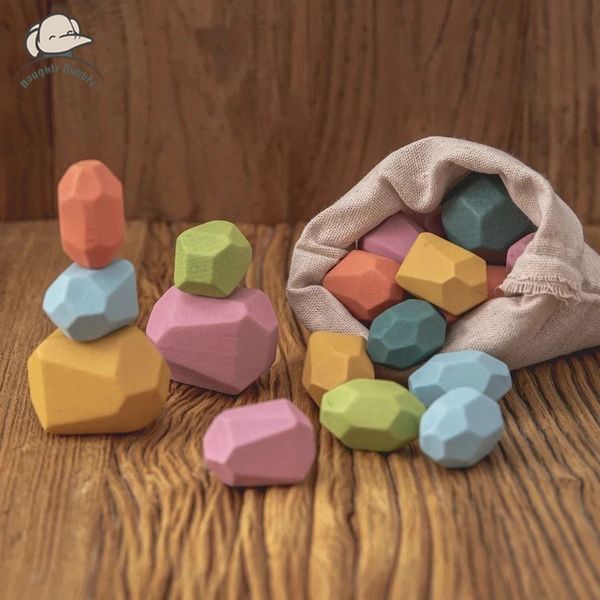
Often kids toys are really bright colours but they don’t need to be and if you have a child that gets easily over stimulated, something like these muted stacking shapes might be a. better choice. The irregular shapes are good for problem solving and trying to figure out the best way to stack them. They could also be used for colour sorting.
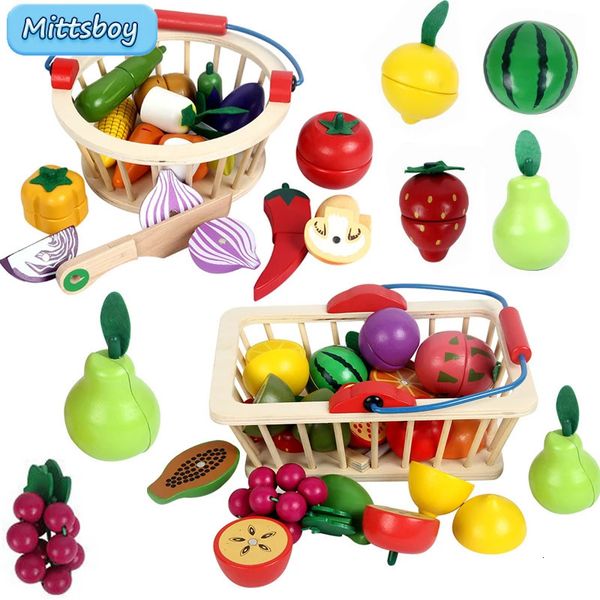
A play kitchen is a good example of an imaginative play toy. Now in Montessori we use Practical Life activities and many Montessorians ‘hack’ their toy kitchen so that it becomes a mini real kitchen, with running water but without the oven. It allows the child to prepare their own snacks and learn the work cycle of cleaning up afterwards.

We had sets of these, mostly bought from Daiso, but they were used for years. They are also a popular choice in the Japanese play centres, you can always find a play kitchen area. Great for imaginative play, and learning how to ‘cut’. And generally learning about food.
The Pikler Triangle is another item that gets classed as Montessori, but isn’t. It does fall in line with Montessori principles, though, which is why it is popular. It encourages freedom of movement and allows young children to take risks and learn to climb at their own pace. Anyone who has ever had a toddler will know that they are going to do it, anyway! It’s pretty versatile and especially with the add-ons it can be used for many years. Older kids can use it for making dens and extensions to their imaginative play.

If you are looking for wooden toys that are aligned with Montessori, but you’re not sure where to start, my friend Suba has beautiful items in her shop at Mirus Toys.
WRAP UP
To wrap up, while wooden Montessori toys have specific design and educational purposes, not all wooden toys meet these standards. It’s essential to understand the differences to make informed choices that align with the Montessori philosophy. High-quality wooden toys, whether Montessori or not, offer numerous benefits, such as durability, safety, and developmental support through imaginative play and cognitive development. As you explore options, consider the toy’s purpose, materials, and design to ensure it supports your child’s growth and learning effectively. Remember, the best toys are those that provide meaningful and engaging experiences, fostering a love for learning and discovery in children.
Got a curious kid who asks brilliant questions?
Join the 193 Curiosity Files and crack a new world mystery together every week.
Free for newsletter subscribers.

Check Out These Other Posts:
- WHAT IS MONTESSORI EDUCATION? HOW TO DO MONTESSORI FROM HOME?
- MONTESSORI AT HOME – PARENTS GUIDE TO SET UP YOUR SPACE
- HOW TO CREATE A MONTESSORI CULTURE SHELF AT HOME: A SIMPLE GUIDE FOR PARENTS

Jo Ebisujima is a Montessori best-selling author and a dedicated guide for moms looking to balance passion with productivity. With years of experience as a Montessori educator and consultant, she specializes in helping families implement the Montessori philosophy at home through her books and the Wonder Mom Success Club. She is also the founder of the 193 Little Adventures Club, a global exploration program for curious kids. Jo is on a mission to help moms build businesses that revolve around their families, making learning and life a fun, structured adventure.